New Zealand National Cricket Team vs England Cricket Team Match Scorecard
New Zealand National Cricket Team vs England Cricket Team Match Scorecard: In June 2026, the New Zealand tour of England witnessed a fiercely contested first Test match at Lord’s Cricket Ground on a wicket that made run-scoring tricky. This was a battle dominated by the bowlers and an example of how strange Test cricket can be. England thrashed defeat by 115 runs at the famous ground in St John’s Wood. This was a key fixture as it highlighted how the Lord’s conditions can be difficult for batting when there is movement with the ball.
England’s bowlers led the way, taking advantage of a tough pitch to keep New Zealand’s batting order at bay. The England national cricket team bowled remarkably well, and the conditions really did not help the New Zealand cricket team. This Test had immediate repercussions for both nations’ World Test Championship ambitions and was also part of the build-up to their respective international cricket calendars.
Match Venue and Playing Conditions
Venue: Lord’s Cricket Ground, St John’s Wood, London
This high-octane Test match was played at the hallowed grounds of Lord’s Cricket Ground. Pitch conditions were also challenging for both sides; Lord’s is regarded as a pitch that is erratic and unpredictable in nature. The balls that were bowled on the ground had such famous slope and pitch characteristics that they took bounce in unexpected directions. This was a nightmare for batsmen representing both the England cricket team and the New Zealand cricket team, as their technical abilities were greatly compromised in this bowler-friendly sort of climate!
However, conditions in June at Lord’s will usually be heavily weighted towards seam and movement off the pitch. The green pitch was stunningly flat to start, but got worse as the day went on, with significant variable bounce and some lateral movement. The ball was made to move through the air and off the surface by environmental conditions like overcast skies and humidity in the atmosphere as well.
Complete Match Scorecard
First Innings Analysis
| Team | Runs | Wickets | Overs | Notable Batsmen |
| England | 140 | 10 | 39.4 | HC Brook (28), EN Gay (50) |
| New Zealand | 113 | 10 | 36.2 | GD Phillips (27), DP Conway (21) |
Batting was unlikely to become any easier as England scored just 140 in its first innings and New Zealand only 113. In the first innings of the England cricket team, HC Brook scored 28 runs, and England scored 50 runs. The New Zealand cricket team had a very poor outing as Glenn Phillips and Devon Conway were able to score 27 and 21 runs, respectively.
Read Also: West Indies Cricket Team vs South Africa National Cricket Team Timeline
Second Innings Summary
| Team | Runs | Wickets | Overs | Notable Batsmen |
| England | 226 | 10 | Declared | HC Brook (52), BA Stokes (28) |
| New Zealand | 138 | 10 | Target Chase | Glenn Phillips (35), TA Blundell (18) |
The second innings of England saw much better batting from Harry Brook, scoring 52, and captain Ben Stokes, 28. Chasing 254, New Zealand crumbled to 138 all out, which handed England a 115-run victory. This is why chasing the runs on a deteriorating pitch helped by a quality bowling attack was always going to be difficult and evident in India’s batting collapse.
Bowling Performances and Key Statistics
England Bowling Performance
| Bowler | Matches | Overs | Maiden Overs | Runs | Wickets | Economy Rate |
| Ollie Robinson | Multiple | 10.5 (1st Inn) | 3 | 39 | 5 | 3.60 |
| Ollie Robinson | Multiple | 10 (2nd Inn) | – | 38 | 2 | – |
| Gus Atkinson | Multiple | 5 | 0 | 9 | 2 | 1.80 |
| Jamie Tongue | Multiple | 10 | 0 | 40 | 3 | 4.00 |
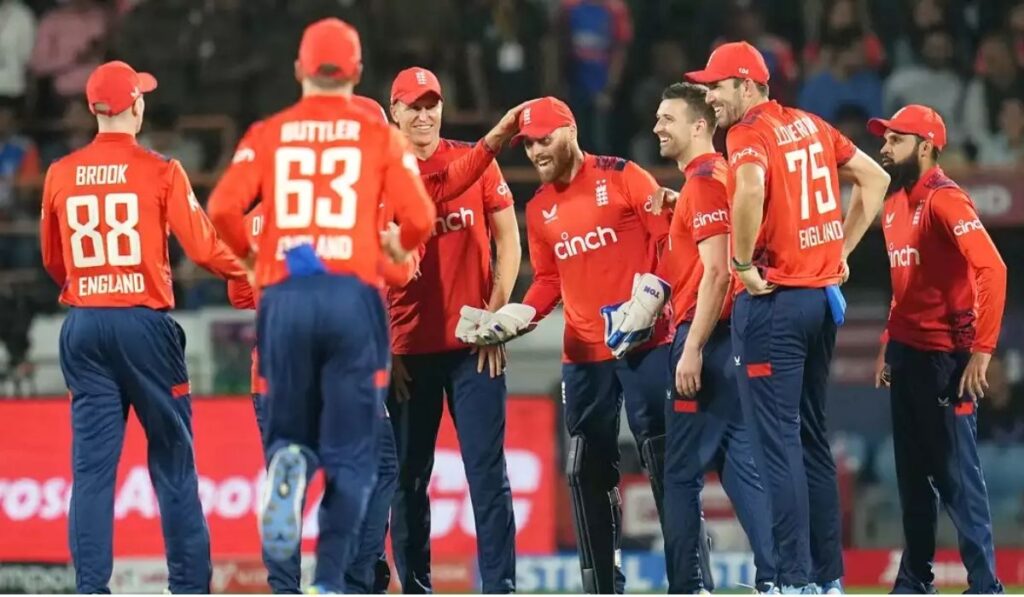
Ollie Robinson dismissed 5 batsmen for 39 runs in the first innings and took 2 wickets at the cost of 38 runs in the second innings, winning him the Player of the Match award. He emerged as the bowler of the match because of his brilliant class with both seam and movement. Robinson brought a world of skill and experience to the England cricket team’s bowling attack.
In the first innings, Jamie Tongue claimed 3 scalps at an economy of 4.00, while Gus Atkinson took 2 key wickets with a stunning economy rate of 1.80. The England bowlers were on target and were very disciplined with their lines throughout the game.
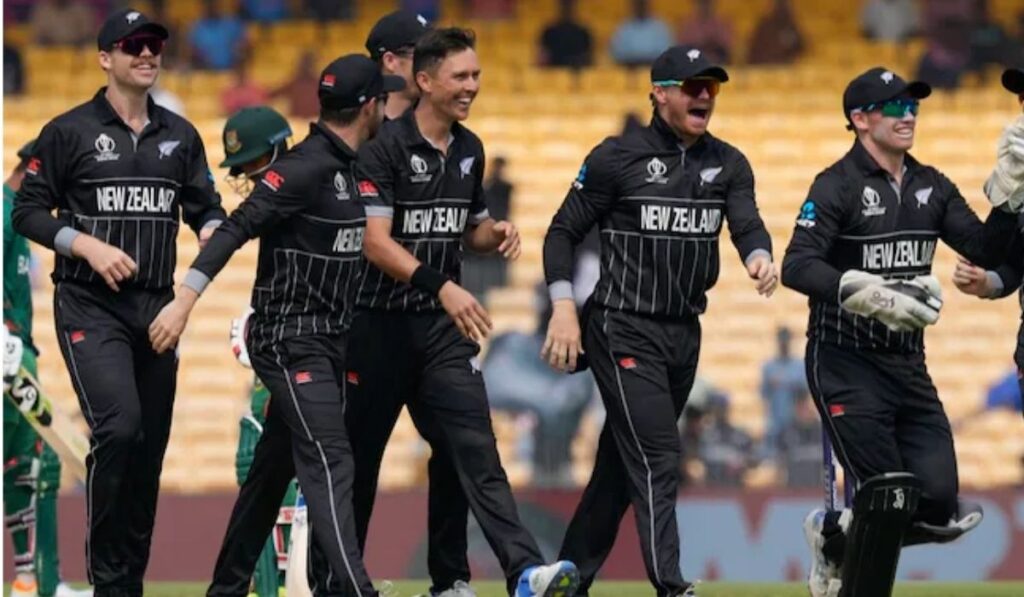
New Zealand Bowling Performance
| Bowler | Overs | Maiden Overs | Runs | Wickets | Economy Rate |
| Neil Wagner | Multiple | – | – | – | – |
| Tim Southee | Multiple | – | – | – | – |
| Kyle Jamieson | 14 | 0 | 62 | 5 | 4.42 |
| Will O’Rourke | 11 | 3 | 25 | 2 | 2.27 |
Seamer Kyle Jamieson took 5 wickets for 62 runs at an economy rate of 4.42 & Will O’Rourke took 2 wickets for 25 runs at an economy rate of 2.27. New Zealand’s bowling attack did well, but England had posted decent totals in both innings.
Key Performance Indicators and Match Statistics
Batting Statistics
- Total Runs in Match: 617 runs across four innings
- Highest Individual Score: EN Gay (50 runs, England 1st Innings)
- Most Runs in Match: Glenn Phillips (New Zealand) – 62 total runs
- Average Runs per Innings: 154.25 runs
- Lowest Total: New Zealand 113 runs (First Innings)
It was a low-scoring game, which skews perception of pitch conditions and the quality of bowling from both sides. England’s second-innings 226 was a lot better than their first innings of just 140, suggesting they adapted to the pitch conditions a little more.
Wicket Distribution
| Team | First Innings Wickets | Second Innings Wickets |
| England | 10 | 10 |
| New Zealand | 10 | 10 |
Both teams were bowled out in both innings, emphasizing the dominant position of the bowling attacks throughout the match.
Read Also: England Cricket Team vs Sri Lanka National Cricket Team Timeline
Match Summary and Results
England captain Ben Stokes: “Couldn’t have asked for more, coming in after all that’s gone on and putting in a performance. Test cricket is tough; you never know what to expect, but it was a case of pinpointing the conditions and reacting to them, which we did best.
The win by this margin put England 1-0 up in the series and was part of a tournament to qualify for the 2025–2027 ICC World Test Championship. Among the highlights were Glenn Phillips’ first Test hundred, Joe Root’s 14,000th Test run, and Matt Henry’s maiden ten-wicket haul.
Player Debuts and Notable Performances
His response was a superb half-century in testing situations, which, given the conditions, was of paramount importance to England, but Emilio Gay was making his Test debut. That’s tough to score in Test cricket logistically and mentally with conditions like that, and also the pressure of playing in a low-scoring game; the fifty runs he got there were worth their weight in gold,” Stokes said of Gay. “Test debut is a harsh way to start, and on your 1st Test like that, what a contribution.
Kane Williamson’s last over for New Zealand, the end of an era for the Kiwi team
Technical Analysis of Pitch Conditions
This Test match displayed numerous key qualities of The Lord’s pitch:
- Day 1 Conditions: The first session saw the pitch helping fast bowlers. It was a windy day and take off of the pitch saw both considerable seam movement and lateral movement, which favoured this green surface. Scores were circumspect on the first day as both sides struggled to make batting look easy.
- Deterioration Pattern: The pitch deteriorated during the course of the match and grew more erratic. Initially, cracks started occurring, especially at the areas where fast bowlers broke their way through the footmarks. Batsmen could gamble against the shot-making, but there was a variable bounce.
- Deteriorating Pitch on Day 5: The pitch became a lot more difficult by the time the third innings of the game arrived, with visible seam movement and variable bounce. It helped England’s bowlers, especially Robinson and Atkinson, to make the most of the help available on a good pitch.
Impact on World Test Championship
This match formed part of the 2025–27 ICC World Test Championship, with England receiving 12 points for their victory and New Zealand receiving 0 points. This had major implications for both teams in their tournament progression, as well as in chasing the World Test Championship final.
Read Also: New Zealand national cricket team vs South Africa national cricket team match scorecard
Frequently Asked Questions (FAQ): New Zealand National Cricket Team vs England Cricket Team Match Scorecard
Q1: New Zealand National Cricket Team vs England Cricket Team Match Scorecard. Why were the scores so low?
The pitch at Lord’s was peculiar and difficult for batsmen in this Test. There was a lot of seam movement due to the green surface and conditions, which made run-scoring extremely difficult. The batting conditions were challenging for both teams to build partnerships, and they had to adjust accordingly on a good bowling wicket.
Q2: Player of the Match in the New Zealand National Cricket Team vs England Cricket Team Match Scorecard 1st Test?
The Man of the Match was Ollie Robinson in bowling, with statistics 5/39 in the first innings and &/38 in the second innings.
Q3: What was the final result of the New Zealand vs England 1st Test?
With their two innings of 140 and 226, England defeated New Zealand (113 &138) by 115 runs.
Q4: How many World Test Championship points did the winner get?
The winning team earned 12 World Test Championship (WTC) points for its victory. Under the current WTC points system, a win awards 12 points, while a tie gives each team 6 points and a draw provides 4 points each. These points are crucial in determining the standings, with teams ranked based on their Points Percentage (PCT) rather than total points to account for different numbers of matches played.
Q5: Which batsman scored a century in this match?
Not this first Test, but it was in this series that Glenn Phillips scored his first Test century.
Q6: Who was the leading wicket-taker for New Zealand in the match?
Kyle Jamieson: 5 wickets for 62 in the match, New Zealand’s leading wicket-taker.
Q7. What was so special about this Test match at Lord’s?
This was the 150th Test at Lord’s, one of cricket’s most iconic grounds.
Q8: What kind of pitch did you get during the match?
The pitch had a lush green surface, which later deteriorated as the match progressed. The cracks and inconsistent bounce that had appeared on the pitch during the first innings got much worse by the second, making batting even harder than it had been then.
Q9: How crucial was the England bowling contingent in their successful efforts?
The English bowling unit, spearheaded by Robinson, exploited the pitch conditions beautifully. The quality Robinson had with seam and movement was a significant factor behind such performance. Support from bowlers Jamie Tongue and Gus Atkinson was a superb backup to Newman as New Zealand were limited to sub-par scores in both innings.
Q10: What did Ben Stokes say about England’s performance?
Stokes hailed the rapid adjustment and dialogue within the team on Friday, saying talks in the dressing room helped pinpoint conditions and devise game plans.
Conclusion About New Zealand National Cricket Team vs England Cricket Team Match Scorecard
The 1st Test at Lord’s Cricket Ground between New Zealand and England was a great contest between two teams with rich traditions in the longer format of the game. The pitch was difficult, aided by some exceptional English bowling to go with the batting woes of both teams, which made for an interesting story.
It helped you gain key World Test Championship points and gave them what they needed in the run-up to the New Zealand tour of England, where this match set a tone with which subsequent matches might run. It was a classic match, and it showed that Test cricket remains an unpredictable contest where champions are differentiated from the challengers by pitch conditions, skill of bowlers, and adaptation. The match was a lesson in Test cricket’s nuance and the power of top-draw bowling in compiling most formats for cricket fans, England national cricket team fans, and New Zealand cricket team fans.
About the Author