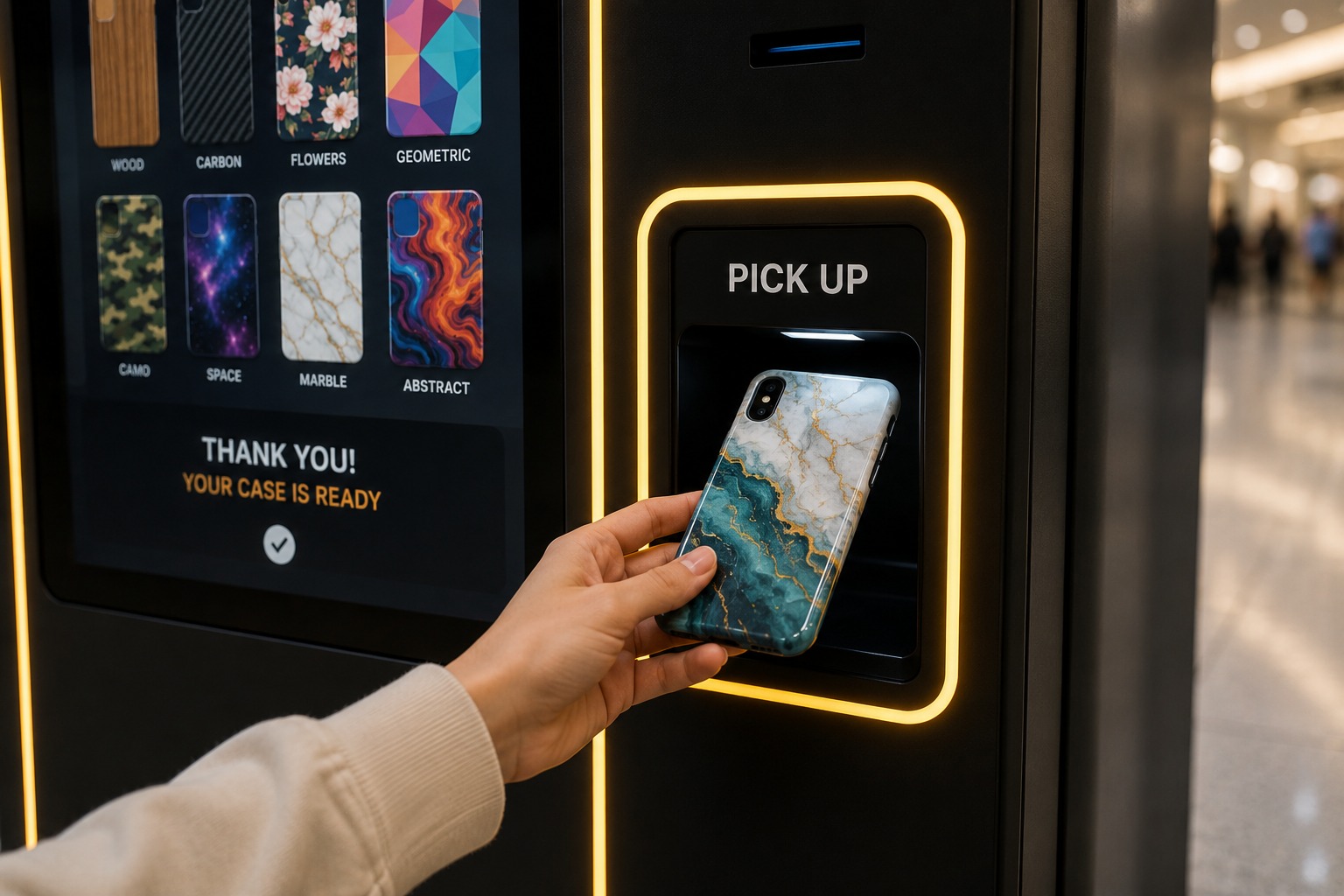
Walk through any busy mall, metro station, or college campus today and you might spot something unusual tucked into a corner. It is not a snack machine or a coffee dispenser. It is a sleek, touchscreen kiosk that prints and dispenses custom phone cases in minutes. No staff, no rent for a full storefront, just a machine quietly doing business while its owner is somewhere else entirely. It is this low overhead setup that has pushed more people to look into a phone cover vending machine business as a realistic way to earn from retail without opening a traditional shop.
This is the phone case vending machine, and it has quietly become one of the more interesting small business ideas to emerge in the last few years. It sits at the intersection of two things people cannot seem to live without: their smartphones and instant gratification.
How the Machine Actually Works
At its core, the machine is a self-service kiosk. A customer picks their phone model on a touchscreen, chooses from a library of designs or uploads a personal photo, and watches the case get printed right there. The whole process usually takes two to five minutes. Some machines print directly onto a blank case using UV printing technology, while others use a heat transfer method. Either way, the result is a custom, ready-to-use phone case with no waiting for shipping and no need for a salesperson to explain anything.
For the person walking by, it feels almost like magic. For the business owner, it is a simple transaction that happens without them lifting a finger.
Why This Model Is Gaining Attention
Phone accessories have always been a strong retail category because everyone owns a phone and most people eventually crack a screen, lose grip, or simply get bored of their current case. But traditional accessory shops come with real overhead. Rent, staff wages, inventory storage, and store hours all eat into profit before a single case is sold.
A vending machine strips most of that away. There is no need to hire someone to stand behind a counter all day. There is no need for a large retail space, since most machines have a compact footprint that fits into a hallway or unused corner. And because the printing happens on demand, there is no need to stock hundreds of pre-made cases in every size and design combination.
The appeal is not just the novelty of the machine itself, but the reduced operating cost compared to running a physical accessory store.
Where These Machines Tend to Do Well
Location matters more than almost anything else in this business. Malls remain a strong choice simply because of consistent foot traffic, but they are not the only option. College campuses work well too, since students are constantly on their phones and often looking for a quick, affordable way to personalize their device. Metro and train stations offer another advantage: people are waiting, often with nothing to do, and a five minute wait for a custom case fits neatly into that dead time.
Airports, cinemas, and large retail complexes have also proven to be solid spots. The common thread across all these locations is simple. High footfall, some amount of idle waiting time, and a demographic that owns smartphones.
The Financial Side
One of the reasons this business model keeps coming up in small business discussions is the relatively low barrier to entry compared to opening a traditional store. There is an upfront cost for the machine itself, along with ongoing expenses for blank cases, ink or transfer materials, and the space rental if the location is not owned. But beyond that, running costs stay fairly light. There is no daily staffing requirement, and restocking supplies does not need to happen more than once every week or two depending on sales volume.
Margins on custom phone cases tend to be healthy because the base material cost is low while customers are usually willing to pay a premium for something personalized. A blank case that costs a few dollars can sell for significantly more once it is printed with a chosen design.
What to Think About Before Getting Started
Like any business, this one comes with things worth considering before jumping in. Machine reliability matters a lot, since a broken kiosk sitting idle is not making anyone money. Design variety also plays a role in keeping customers interested, since a limited catalog can get stale quickly. And location negotiations, whether that means paying rent to a mall or working out a revenue share with a venue, can shape profitability just as much as sales volume does.
It is also worth researching different machine suppliers before committing, since build quality, printing speed, and after sales support can vary quite a bit. Reading up on real numbers, actual return figures, and honest breakdowns from people already running these machines can save a lot of guesswork before spending money on a unit.
A Simple Idea With Real Potential
There is something appealing about a business that does not require standing behind a counter all day. The phone case vending machine model taps into a market that is not going anywhere anytime soon, since smartphones are only becoming more central to daily life. It will not suit everyone, and success still depends on picking the right spot and keeping the machine running smoothly, but as a low overhead entry into retail, it is hard to ignore.
About the Author